
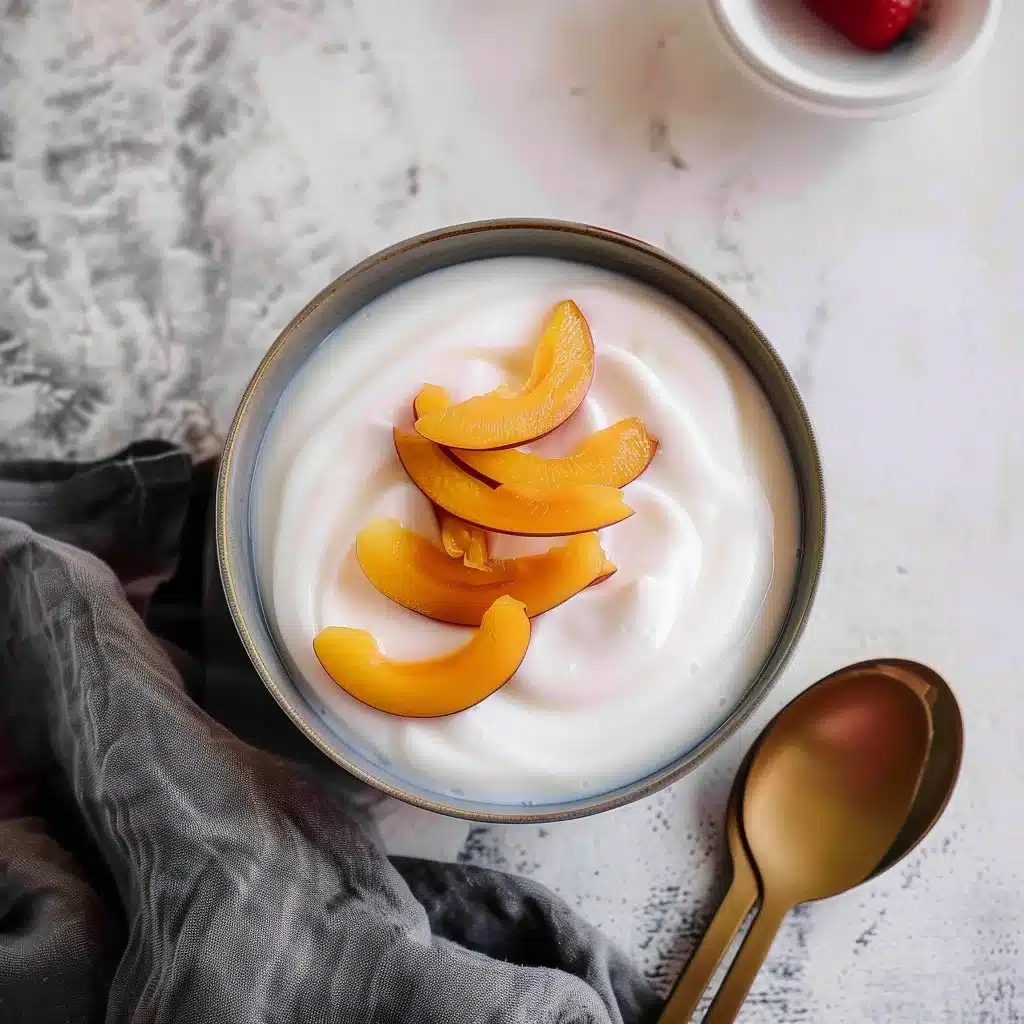
I start with the ingredient itself when I think about blending cottage cheese. Before it becomes smooth, before it turns into something spreadable or spoonable, it has a very clear physical identity. The curds are visible, the whey moves freely, and the texture tells you exactly what it is. Blending doesn’t disguise that starting point so much as it reorganizes it.
The transformation is driven by motion rather than heat. As the blades move through the cheese, curds collapse, moisture redistributes, and air is pulled into the mixture. What emerges is not just smoother, but structurally different. The mouthfeel changes from loose and granular to cohesive and calm, and that change carries through every way the blend is used.
Once blended, the mixture becomes a flexible base rather than a fixed dish. It can be chilled, spread, stirred, or simply eaten as is. The process is simple, but the outcome feels considered, especially when the blend is allowed a little time to settle before use.

Blended Cottage Cheese
- Total Time: 2 minutes
- Yield: 4 servings
- Diet: Vegetarian
Description
Transform cottage cheese into a smooth and versatile blend perfect for spreads, dips, or breakfast bowls.
Ingredients
- Cottage cheese
Instructions
- Add the cottage cheese to a high-speed blender, food processor, or immersion blender.
- Blend on high for 2 minutes, scraping down the sides occasionally until completely blended and smooth.
- Use as a spread, dip, or breakfast bowl.
- Store in an airtight container for up to 1 week.
Notes
For best results, avoid overheating during blending and store in a cool environment.
- Prep Time: 2 minutes
- Cook Time: 0 minutes
- Category: Condiment
- Method: Blending
- Cuisine: American
Nutrition
- Serving Size: 1 serving
- Calories: 150
- Sugar: 6g
- Sodium: 300mg
- Fat: 5g
- Saturated Fat: 2g
- Unsaturated Fat: 3g
- Trans Fat: 0g
- Carbohydrates: 8g
- Fiber: 0g
- Protein: 15g
- Cholesterol: 15mg
Make-ahead and storage behavior
Blended cottage cheese lends itself well to making ahead because the structure established during blending remains stable over time. Once the curds have fully broken down and the mixture becomes homogenous, it does not easily revert to its original granular form.
When transferred to an airtight container and refrigerated, the blend holds its smoothness for several days. The surface may lose some initial gloss as free moisture binds more tightly within the protein network, but the interior texture stays consistent.

This predictability makes it useful as a prepared base. Knowing that the texture will not change dramatically between blending and serving creates confidence in how it will behave later.
Variations using the same method
The blending method itself remains consistent even when the ingredient list changes. The key requirement is that cottage cheese is given enough time under shear to fully collapse its curds before additional elements are relied on for flavor or structure.
Once smooth, the blend can take on different profiles without losing cohesion. The same process underpins desserts like blended cottage cheese chocolate mousse, where the smooth base supports added ingredients without reintroducing grain.
As long as the initial blending achieves a uniform base, the method scales across both sweet and savory uses without structural compromise.
Serving moments and use cases
Blended cottage cheese works best when its texture is allowed to lead how it is served. As a spread, it benefits from being well chilled so it holds clean edges and resists slumping.
As a dip or bowl base, a slightly warmer temperature can make it feel looser and more yielding, which may be desirable depending on context. The blend responds quickly to temperature shifts, so small adjustments can change the experience.
This adaptability allows it to move easily between roles without needing to be reworked or altered.
Texture and presentation cues
Visual cues help signal when the blend is fully processed. During blending, the mixture shifts from visibly mottled to uniformly pale and glossy. Any remaining curd specks usually indicate insufficient blending rather than an ingredient issue.
Once chilled, the surface becomes more matte and slightly firmer. Pressing gently with a spoon should meet light resistance without cracking or pooling liquid.
These cues are more reliable than time alone, especially across different blenders or batch sizes.
Ingredient behavior during blending
Cottage cheese contains both solids and liquid, and blending redistributes these elements rather than removing them. The curds fracture and disperse, while whey integrates into the continuous phase.

Air incorporation during high-speed blending increases volume slightly, but the dominant change is structural. Proteins unfold and reorganize, creating a smoother matrix that traps moisture evenly.
This reorganization is what allows the blend to feel creamy rather than whipped, even though air is present.
Cooling and stabilization effects
Although no heat is used, cooling plays an important role after blending. Refrigeration slows molecular movement and allows the newly formed structure to settle.
As the blend cools, it becomes marginally firmer and more cohesive. This stabilization helps it maintain shape when spread or scooped.
The same cooling logic applies to other cottage-cheese-based preparations like creamy cottage cheese peanut butter dip, where chilling defines final texture.
Batch scaling and blender capacity
Scaling the recipe changes how effectively shear is applied. Larger volumes reduce blade contact per unit of cottage cheese, which can lengthen the time needed to reach full smoothness.
Overloading a blender often results in uneven processing, where some curds remain intact while others over-blend. Working in smaller batches or extending blending time helps preserve uniformity.
Maintaining similar fill levels between batches produces the most consistent results.
Reheating and temperature sensitivity
If the blended cottage cheese is gently warmed, the structure loosens as proteins regain mobility. This can make the mixture more fluid, which may be useful in certain applications.

Rapid or high heat, however, risks separating moisture from the protein matrix. Gradual temperature changes preserve cohesion better than sudden ones.
Because the blend is designed to be stable when cold, reheating is best approached carefully and only when necessary.
Encouraging close: trusting the blend
Blending cottage cheese is a simple process, but it rewards attention. Giving the curds enough time under the blades, watching for visual cues, and allowing the mixture to rest all contribute to the final mouthfeel.
Once smooth, the blend becomes a dependable ingredient rather than a fragile one. It holds its shape, responds predictably to temperature, and adapts easily to different uses.
That reliability is what makes the process worth repeating. With nothing more than blending and cooling, cottage cheese shifts into something calm, creamy, and ready to be used again and again.