
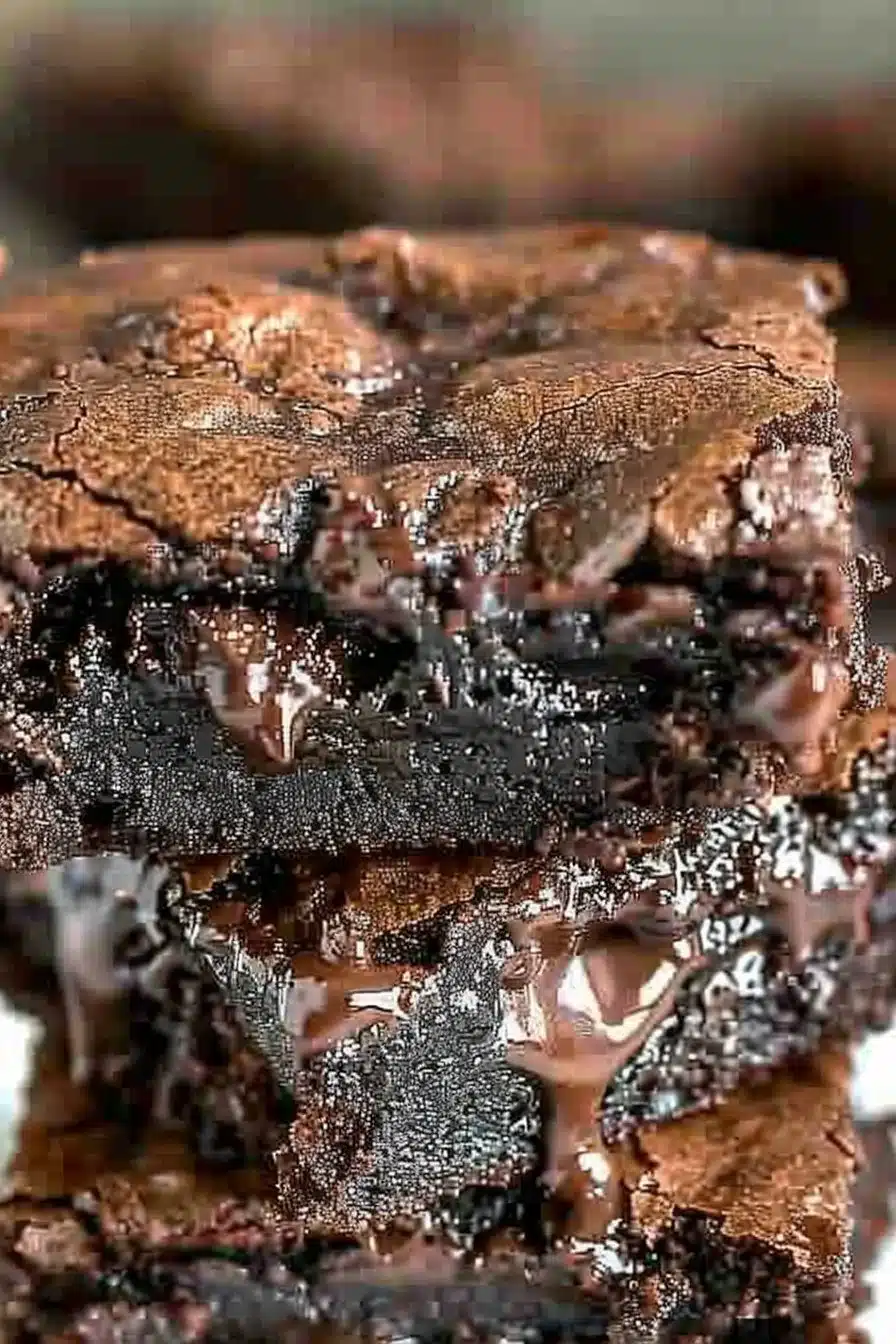
I always come back to these brownies when I want something that feels easy from the start. There is comfort in knowing the batter comes together without fuss, and that the texture will find its way in the oven without much intervention. From the first stir, the mixture feels light in the bowl, glossy and relaxed, already hinting at the way it will bake.
What stands out most is how gently everything happens. The process does not demand constant attention or complicated steps. Instead, the brownies rely on simple interactions between chocolate, yogurt, and heat. The result is a pan of brownies that feels balanced and approachable, with a texture that settles softly rather than aggressively.
How the batter shifts as ingredients are mixed
The earliest texture change happens when melted chocolate meets yogurt and sugar. At first, the chocolate is fluid and warm, the yogurt cool and thick. As they are whisked together, they begin to emulsify, turning into a smooth, unified base that feels lighter than expected.
This stage sets the tone for the rest of the batter. The mixture becomes glossy and cohesive, with no resistance when stirred. It is the point where the brownies begin to feel effortless, as though the hardest part has already passed.
The quiet role of dry ingredients coming together
When flour, cocoa powder, and baking soda are added, the batter changes more subtly. Dry ingredients hydrate slowly, thickening the mixture without making it stiff. The cocoa deepens the color, while the flour provides just enough structure to hold everything together.
I like to mix just until everything disappears into the batter. Overworking is unnecessary here. Once combined, the mixture feels smooth and pourable, with a lightness that stays present even as it thickens.
What happens once the pan enters the oven
As soon as the batter begins to warm, the texture starts shifting again. The edges heat first, and moisture begins to evaporate there more quickly. This creates the early formation of a delicate outer crust.
Meanwhile, the center remains softer for longer. Heat moves inward gradually, allowing the brownies to rise gently rather than dramatically. This balance between edge and center is what gives the final brownies their appealing contrast.
Watching the surface for texture cues
During baking, the surface offers small signals that guide timing. Tiny cracks may appear near the edges, and the top loses its initial sheen. These changes indicate that the structure is beginning to set.
The goal is not complete firmness in the oven. A skewer that comes out mostly clean tells you the brownies are ready to finish setting outside the heat. Pulling them at this stage keeps the texture light rather than dry.
The importance of resting in the pan
Once out of the oven, the brownies are still in motion internally. Resting them in the pan allows moisture to redistribute slowly. The center firms slightly while remaining soft, and the edges relax just enough to avoid crumbling.
This short rest is essential. It gives the brownies time to find their final balance before being moved. Skipping it can disrupt the structure that has just formed.
Cooling and how it defines the final crumb
Transferring the brownies to a wire rack introduces airflow beneath them. This prevents condensation from building up and keeps the bottom from becoming heavy or damp.
As they cool completely, the brownies settle into their finished texture. The crumb feels cohesive and light, holding together cleanly when sliced. This stage completes the transformation that began with the first whisk.
Serving texture and simple additions
When fully cooled, these brownies are easy to serve. The edges offer a gentle firmness, while the center remains soft and even. Each bite feels balanced, without any sharp contrast.
They are satisfying on their own, but they also pair well with other chocolate-forward desserts. For a denser alternative with a similar flavor profile, these high protein brownies explore a different approach to structure while staying within the same comforting theme.
How the brownies behave after storage
Stored in an airtight container, the brownies keep their softness for a short time. Moisture remains trapped inside, preserving the light crumb. Over time, the texture may become slightly more compact, but it stays pleasant.
If you enjoy comparing textures across similar bakes, these peanut butter brownies show how different ingredients influence firmness and crumb while following a similar baking rhythm.
A gentle wrap-up worth repeating
These Greek yogurt brownies succeed because they do not ask for perfection. The process is forgiving, and the texture develops naturally through mixing, baking, and cooling. Each stage supports the next without demanding constant adjustment.
When sliced and served, the brownies feel light yet composed, offering an easy kind of comfort. They are the sort of bake that fits naturally into everyday moments, ready to be made again whenever something simple and reassuring is needed.
Print
Soft-Baked Greek Yogurt Chocolate Brownies
- Total Time: 40 minutes
- Yield: 16 brownies 1x
- Diet: Vegetarian
Description
Deliciously moist brownies made with Greek yogurt and chocolate, offering a healthier twist to traditional brownies.
Ingredients
- 1 cup chopped chocolate
- 1 cup Greek yogurt
- 1 cup sugar
- 1 cup all-purpose flour
- 1/2 cup cocoa powder
- 1 tsp baking soda
- 1/4 cup milk
- 1/2 cup chocolate chips (optional)
Instructions
- Preheat the oven to 180C/350F. Line an 8 x 8-inch pan with parchment paper, and set aside.
- In a microwave-safe bowl, add your chopped chocolate. Melt your chocolate.
- Let sit for 1-2 minutes, before adding your yogurt and sugar. Whisk until smooth and transfer to a large mixing bowl.
- Add the flour, cocoa powder, and baking soda, and mix until just combined.
- Add your milk and mix well, until fully incorporated.
- Fold through your chocolate chips, if using them.
- Transfer to the lined pan and bake the brownies for 25-30 minutes, or until a skewer comes out just clean.
- Remove from the oven and let cool in the pan for 10 minutes, before carefully transferring to a wire rack to cool completely.
Notes
Store in an airtight container to maintain moisture. Reheat at low temperature to preserve texture.
- Prep Time: 10 minutes
- Cook Time: 30 minutes
- Category: Dessert
- Method: Baking
- Cuisine: American
Nutrition
- Serving Size: 1 brownie
- Calories: 180
- Sugar: 15g
- Sodium: 200mg
- Fat: 7g
- Saturated Fat: 4g
- Unsaturated Fat: 3g
- Trans Fat: 0g
- Carbohydrates: 25g
- Fiber: 2g
- Protein: 3g
- Cholesterol: 0mg