
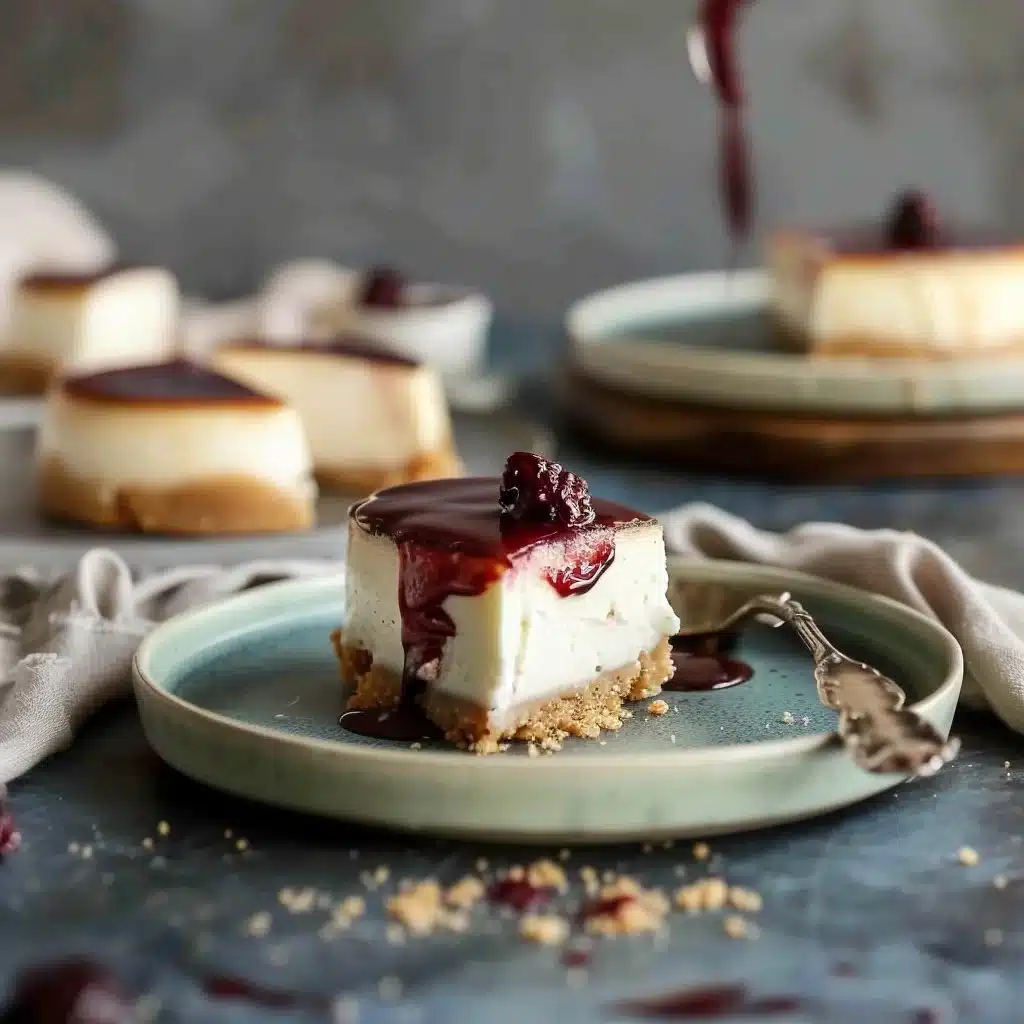
You begin this Greek yogurt cheesecake with comfort in mind. It’s the kind of dessert that feels reassuring before it ever reaches the oven, familiar ingredients, steady steps, and a process that doesn’t rush you. From the moment you stir the filling together, you can sense how it will feel later on the fork: smooth, gentle, and softly set, with just enough structure to hold its shape.
What makes this cheesecake special is how it balances ease with care. You’re not forcing anything to happen. Instead, you let each stage do its quiet work, mixing until smooth, baking slowly, cooling patiently. The result is a cheesecake that feels calm and composed, offering a creamy mouthfeel that invites you to slow down and enjoy each bite.
Print
Healthier Greek Yogurt Cheesecake
- Total Time: 540 minutes
- Yield: 12 servings 1x
- Diet: Vegetarian
Description
A creamy and sturdy cheesecake made with Greek yogurt and a graham cracker crust, topped with a delicious berry compote.
Ingredients
- 1 ½ cups graham cracker crumbs
- ½ cup melted butter
- ¼ cup granulated sugar
- 16 oz cream cheese, softened
- 1 cup Greek yogurt
- ¾ cup granulated sugar
- 1 tsp vanilla extract
- 2 tbsp lemon juice
- 3 large eggs
- 2 cups mixed berries (for compote)
- ½ cup fruit juice (for compote)
- 2 tbsp chia seeds (optional, for compote)
Instructions
- Preheat oven to 350ºF. Prepare a water bath pan and wrap a 9″ springform pan tightly with foil; set aside.
- In a medium bowl, combine graham cracker crumbs, melted butter, and sugar. Press mixture evenly into the bottom of the springform pan. Bake for 8 minutes; cool before wrapping tightly in foil.
- Reduce oven temperature to 325ºF. Using a stand mixer, beat cream cheese until smooth, about 2 minutes. Add granulated sugar, Greek yogurt, vanilla, and lemon juice, and beat until smooth.
- Add eggs one at a time, mixing on low-medium speed until just combined. Pour cheesecake filling onto the crust in the springform pan.
- Place the springform pan in a roasting pan filled with 1 inch of hot water. Bake at 325ºF for 45-55 minutes, until the middle jiggles slightly but looks firm.
- Turn off the oven, crack the door, and cool cheesecake in the oven for 1 hour. Transfer to the fridge to chill for 8 hours.
- For the berry compote, simmer the berries and juice in a saucepan for 10-15 minutes. Remove from heat and stir in chia seeds to thicken if desired. Serve atop the cheesecake.
Notes
Ensure to cool the cheesecake gradually in the oven to prevent cracks. Store in an airtight container in the refrigerator.
- Prep Time: 15 minutes
- Cook Time: 65 minutes
- Category: Dessert
- Method: Baking
- Cuisine: Greek
Nutrition
- Serving Size: 1 slice
- Calories: 320
- Sugar: 15g
- Sodium: 300mg
- Fat: 18g
- Saturated Fat: 9g
- Unsaturated Fat: 7g
- Trans Fat: 0g
- Carbohydrates: 34g
- Fiber: 2g
- Protein: 6g
- Cholesterol: 80mg
Starting with a crust that feels steady
The crust is where everything begins to anchor. When you combine graham cracker crumbs with melted butter and sugar, the mixture changes almost immediately. Dry crumbs soften as they absorb the fat, turning loose pieces into something pressable and cohesive.
As you press the crust into the pan, you can feel it firm under your fingers. That pressure matters. A well-packed base gives the cheesecake something solid to rest on later, creating a contrast between the gentle filling and the slightly structured bottom layer. A brief bake sets this foundation, giving it just enough strength to support what comes next.
Why Greek yogurt changes the filling experience
Greek yogurt plays a quiet but important role in the filling. When it’s blended with cream cheese, the mixture loosens and smooths, becoming more fluid and easier to work with. The filling takes on a lighter feel, not airy, but balanced and relaxed.

As you mix, the yogurt helps everything come together evenly. The texture becomes uniform, without lumps or streaks, and the filling settles into a creamy consistency that pours smoothly over the crust. It’s at this stage that the cheesecake begins to promise that soft, comforting bite.
Mixing in a way that protects the texture
The order of mixing matters more than it might seem. Starting with cream cheese alone allows it to soften fully before anything else is added. When sugar, Greek yogurt, vanilla, and lemon juice follow, they blend in smoothly, creating a cohesive base.
Adding the eggs last, one at a time, keeps the mixture calm. You’re folding them in gently, not whipping. This helps the filling stay dense in a pleasant way, avoiding excess air that could cause cracks or a spongy texture later. The batter should look glossy and even, moving slowly when you lift the spoon.
How the water bath supports a calm bake
Placing the cheesecake in a water bath might feel like an extra step, but it’s one of the most comforting parts of the process. The surrounding hot water creates a gentle environment in the oven, preventing sudden temperature changes.
As the cheesecake bakes, the heat reaches it gradually. This slow approach helps the filling set evenly from edge to center. Instead of puffing or pulling away from the sides, the cheesecake rises just enough, then settles into itself, keeping the surface smooth and level.
Watching the filling set without rushing
As baking progresses, the filling begins to change. The edges firm first, while the center remains softly set. When you gently shake the pan, you’re looking for a slight wobble in the middle, a sign that the cheesecake is nearly there.
This moment requires trust. Taking it out too early leaves it loose, while baking too long tightens the texture. That gentle jiggle tells you the structure has formed but still has room to relax as it cools.
Cooling as part of the texture story
Once the oven is turned off, letting the cheesecake cool slowly inside with the door cracked makes a noticeable difference. The gradual drop in temperature allows the filling to settle without stress, reducing the chance of surface cracks.

After that rest, transferring it to the refrigerator gives the cheesecake time to fully come together. Over several hours, the texture firms evenly, becoming sliceable while remaining creamy on the inside. This patience is what gives the cheesecake its calm, composed mouthfeel.
Adding a berry topping without overwhelming the base
A simple berry compote adds a gentle contrast to the cheesecake. As berries simmer, they soften and release their juices, creating a topping that feels vibrant without being heavy. If you add chia seeds, the mixture thickens slightly, helping it sit neatly on top.
The compote rests on the chilled cheesecake rather than sinking in, keeping the layers distinct. Each bite offers a balance of smooth filling, structured crust, and soft fruit, all working together without competing.
Serving slices that feel just right
When you’re ready to serve, a clean knife and a slow cut make all the difference. The cheesecake should hold its shape easily, revealing smooth sides and a defined crust. Each slice feels sturdy but soft, ready to melt gently as you take a bite.
If you enjoy this kind of baked, creamy dessert, you might also like this no bake mini cheesecake bites recipe, which leans into the same comforting flavors in a smaller, chilled format. For another smooth dessert built around yogurt, this healthy protein chocolate mousse offers a different kind of creamy pause.
Storing leftovers with care
Stored in the refrigerator, the cheesecake keeps its texture well for several days. Covering it or placing it in an airtight container prevents the surface from drying out and helps the crust stay crisp.

If you ever want to soften a slice slightly, letting it sit at room temperature for a few minutes is enough. The filling relaxes just a touch, returning to that smooth, comforting feel you worked to create.
A gentle encouragement to make it again
This healthier Greek yogurt cheesecake isn’t about perfection. It’s about following a steady rhythm and trusting the process. Each step builds on the last, creating a dessert that feels familiar, comforting, and quietly satisfying.
When you make it again, the steps will feel even easier. You’ll recognize the textures, the signals, and the timing. And each time, you’ll end up with the same reward: a slice that feels soft, calm, and worth slowing down for.