

You come to this recipe wanting something familiar and calming, and the process meets you there. Greek yogurt cookie dough comes together without heat or waiting, shifting from loose ingredients into a smooth, spoonable mixture almost immediately. The comfort is in how quickly the texture settles and how little effort it asks from you.
As you mix, the dough changes in your bowl, becoming creamier and more cohesive with every turn. Paying attention to those shifts helps you understand when it is ready, whether you plan to enjoy it right away or let it chill into a firmer, more classic cookie dough feel.
Print
Greek Yogurt Cookie Dough (High Protein, Low Carb)
- Total Time: 10 minutes
- Yield: 4 servings 1x
- Diet: High Protein, Low Carb
Description
A delicious and nutritious cookie dough made with Greek yogurt and protein powder, perfect for a guilt-free treat.
Ingredients
- 1 cup Greek yogurt
- 1/2 cup nut butter
- 1/2 cup protein powder
- 1 cup almond flour
- 1/2 cup chocolate chips
Instructions
- Combine all ingredients in a bowl until a dough forms.
- Add chocolate chips and fold in.
- Eat right away or chill for a few hours in the fridge for the perfect cookie dough consistency.
Notes
For best flavor, chill the dough before enjoying. Store in an airtight container to maintain freshness.
- Prep Time: 10 minutes
- Cook Time: 0 minutes
- Category: Dessert
- Method: No Cook
- Cuisine: Greek
Nutrition
- Serving Size: 1 serving
- Calories: 200
- Sugar: 5g
- Sodium: 150mg
- Fat: 10g
- Saturated Fat: 2g
- Unsaturated Fat: 8g
- Trans Fat: 0g
- Carbohydrates: 15g
- Fiber: 4g
- Protein: 10g
- Cholesterol: 5mg
Texture changes during mixing and blending
At the start, the Greek yogurt, nut butter, and protein powder exist as separate elements with very different consistencies. The yogurt is thick but fluid, the nut butter dense and resistant, and the protein powder dry and fine. When you begin mixing, these contrasts are obvious, and the mixture may look uneven or streaked.
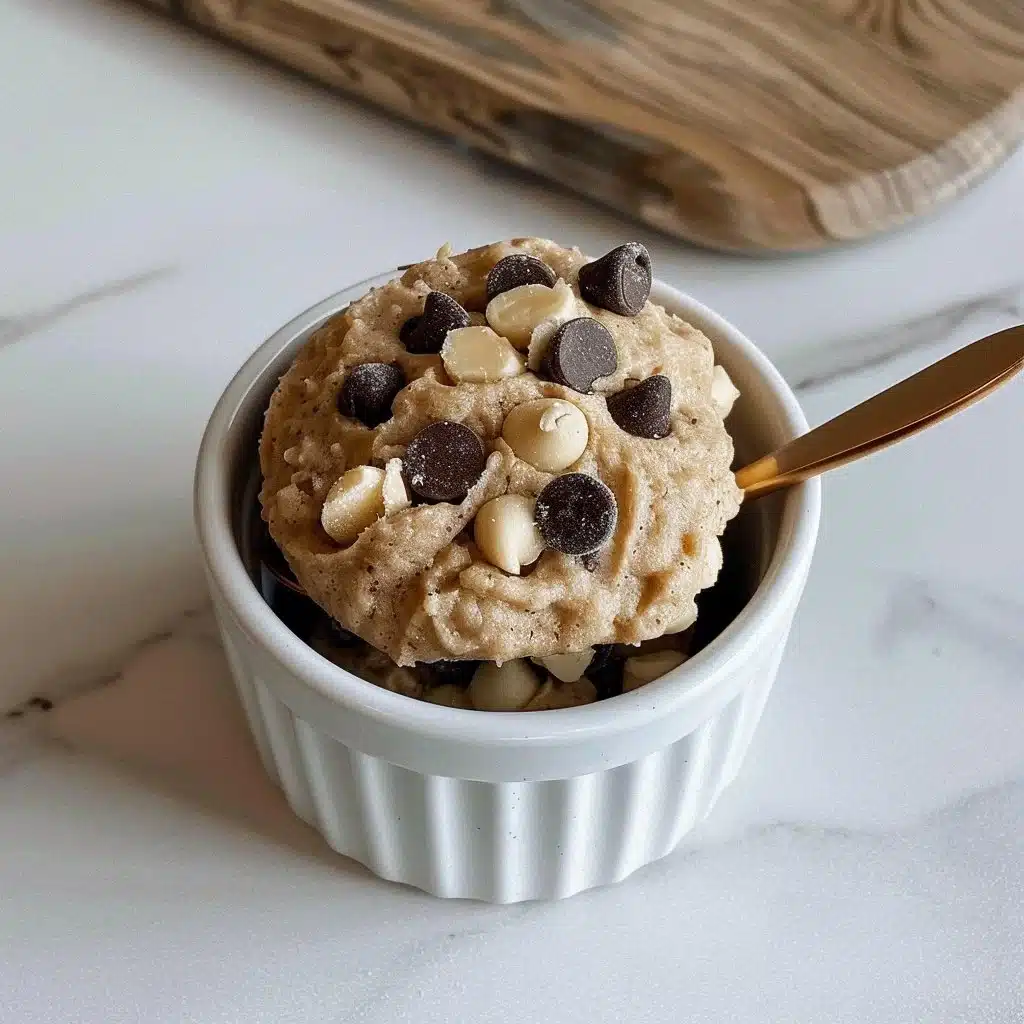
As you continue to stir, the fat from the nut butter loosens and spreads, allowing the yogurt to pull the dry particles into suspension. The mixture thickens steadily, moving from a soft paste into something more dough-like. This is the point where the texture becomes creamy rather than wet.
You can feel when the transformation is complete. The dough starts to pull away from the sides of the bowl and holds together without slumping. That moment signals that the base texture is established and ready for the next step.
How chilling affects firmness and structure
When you place the dough in the refrigerator, the change is subtle but important. Cooling slows the movement of fats and proteins, allowing the dough to firm without drying out. The creamy texture you created during mixing becomes more stable and easier to handle.
After a short chill, the dough feels less sticky and more scoopable. It holds its shape better on a spoon and feels closer to traditional cookie dough in density. This firmness comes from temperature, not from additional ingredients.
Longer chilling continues this process gradually. The dough does not become hard, but it does gain definition, making it easier to portion or serve neatly while keeping its smooth mouthfeel.
Common texture issues and gentle fixes
If the dough feels too loose after mixing, it usually means the dry ingredients have not fully absorbed moisture yet. Giving it a few minutes to rest before chilling often solves this, as the protein powder and almond flour continue to hydrate.
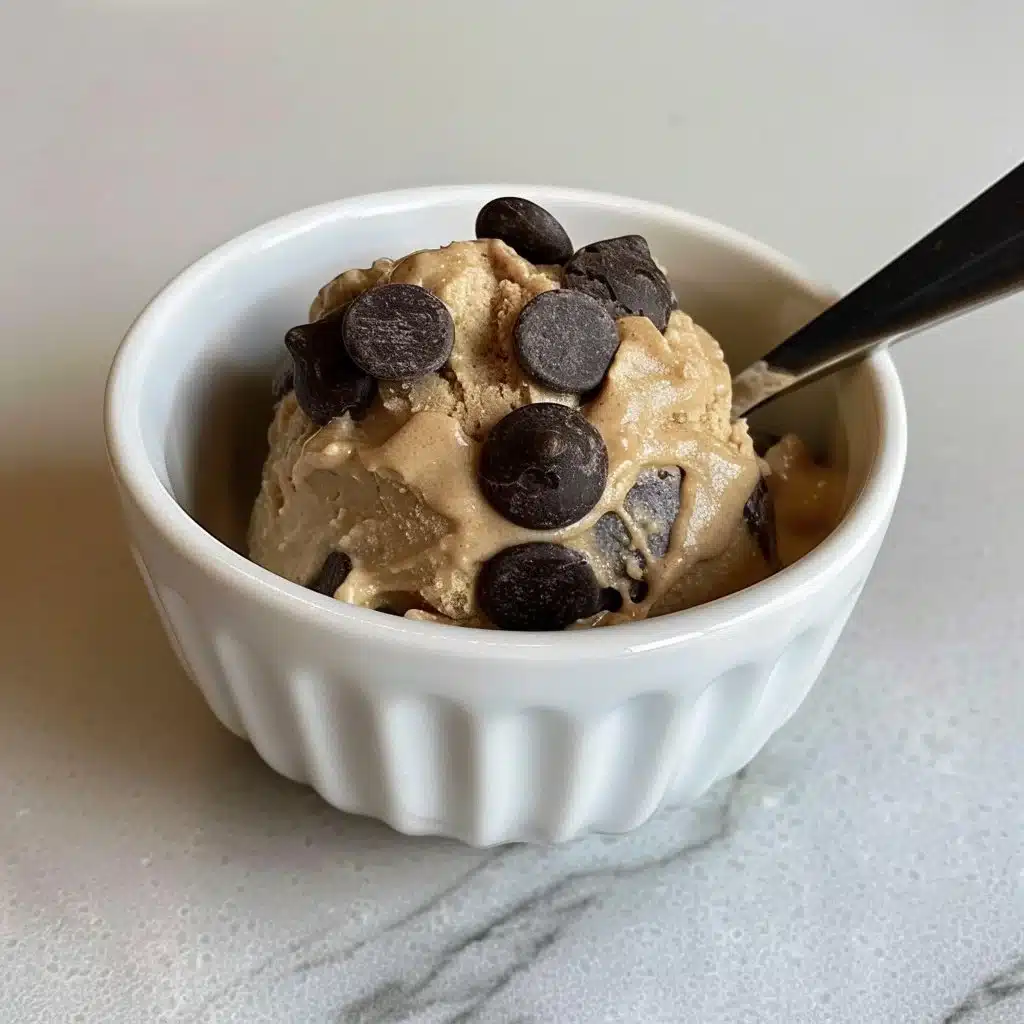
On the other hand, a dough that feels overly stiff can benefit from gentle mixing to redistribute moisture. Even a small amount of additional stirring can restore creaminess without changing the recipe structure.
Sticking is another common concern. Chilling addresses this naturally, but lightly dampening your spoon or hands can also make handling easier if you are working with the dough right away.
Serving texture and contrast from mix-ins
Once chocolate chips are folded in, the texture changes again. The dough becomes slightly more resistant as the solid pieces interrupt the smooth base. This contrast is intentional and adds interest to each bite.
The chocolate chips remain distinct rather than melting into the dough, giving you small bursts of firmness against the creamy background. This balance keeps the dough from feeling flat or overly uniform.
When served chilled, the contrast becomes more pronounced. The dough feels cool and smooth, while the chocolate chips provide structure that breaks up the creaminess just enough.
How temperature at serving shapes mouthfeel
Serving temperature has a noticeable effect on how this cookie dough feels. Straight from the refrigerator, it is firm, creamy, and easy to scoop. The flavors feel slightly muted but well blended.
After a few minutes at room temperature, the dough softens. The nut butter relaxes, and the overall texture becomes silkier and more yielding. This can make the dough feel more indulgent without losing cohesion.
Neither option is better, just different. Knowing how temperature affects the dough lets you choose the experience you want in the moment.
Holding behavior over time in the refrigerator
As the dough sits in the refrigerator, moisture continues to balance itself throughout the mixture. The yogurt and nut butter reach equilibrium, which can slightly change the consistency over time.
After a day or two, the dough may feel a touch firmer than when first mixed. A brief stir brings it back to a smoother state, redistributing moisture and restoring creaminess.
Keeping the dough sealed is important. Exposure to air can dry the surface, which affects texture more than flavor. Proper storage helps the dough stay consistent and pleasant to work with.
Serving with confidence and light encouragement
This Greek yogurt cookie dough is forgiving by nature. It responds well to small adjustments, temperature changes, and time, without losing its core texture. That reliability makes it comforting to return to.
You do not need to rush or perfect anything. The dough tells you when it is ready, whether you enjoy it immediately or let it chill into a firmer form.
Once you understand how the texture shifts through mixing and chilling, making this recipe becomes easy and reassuring. It is there for you whenever you want something creamy, familiar, and quietly satisfying.