
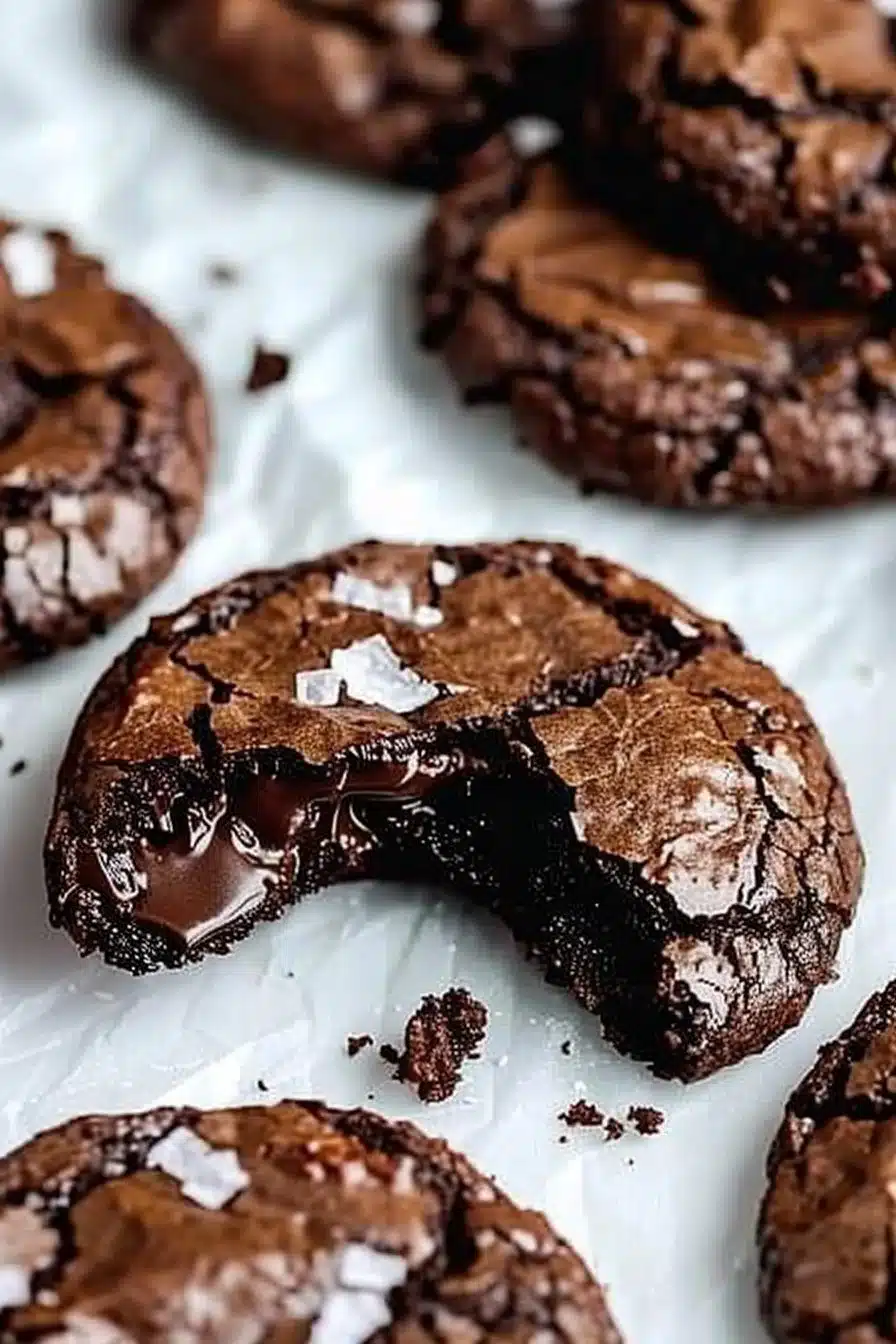
Creaming the unsalted butter with granulated and brown sugar converts discrete crystals and fat droplets into a continuous glossy paste that traps air between layers of fat. Oven heat at 350°F drives rapid gas expansion and protein coagulation, causing edges to set while centers retain a glistening, dense phase.
Sequential fat and sugar reconfiguration during creaming
In this recipe, the initial order, creaming butter with granulated sugar and brown sugar before adding eggs, establishes a dispersed fat-sugar matrix that dictates later behavior. The large volume of both sugars present at 1 cup each determines the rate at which sugar crystals abrade the butter; that abrasion redistributes microscopic air pockets in a way also observed in dense, short-bake formats such as high protein brownie cookies. Adding eggs after creaming introduces aqueous protein and lecithin from the yolks into that matrix, which pauses the free migration of fat and delays full integration of flour when it is added later. Because the recipe instructs to fold dry components in gradually, the early fat-sugar paste resists immediate dilution, preserving a glossy, semi-cohesive batter that influences how the batter spreads when spooned onto ungreased baking sheets. The chocolate chips folded in at the end disrupt continuous surfaces and locally alter heat absorption during the 10-12 minute bake.
Cumulative egg incorporation altering batter cohesion
Beating the two large eggs one at a time into the creamed butter-and-sugar base changes batter cohesion stepwise rather than abruptly. The first egg transforms the paste into a more plastic, ribbon-like mass as yolk emulsifiers reduce interfacial tension between fat and water phases; the second egg increases liquid fraction and raises the rate at which the batter yields under shear. This sequential addition is critical for the dough to accept the 1 1/4 cups of all-purpose flour without forming large pockets of dryness or requiring aggressive mixing. When dry ingredients are added gradually after the egg additions, the progressive hydration of starch and proteins occurs against an already emulsified background, producing a dough that will hold rounded tablespoon drops and limit outward flow on the baking sheet. The timing here is essential: if eggs had been combined with dry ingredients first, the same cohesive outcome would not develop.
Delayed leavening response from baking powder in cocoa matrix
The single 1/2 teaspoon of baking powder in the dry mix behaves differently inside a cocoa-rich batter than in a white-flour cake batter. Cocoa powder occupies a significant fraction of the 1/2 cup dark solids and binds some available moisture, which slows the initial acid-base interaction that releases carbon dioxide. Because the recipe calls for gradual addition of the dry mix into the wet, the baking powder is dispersed into a batter whose moisture content and pH are already altered by the sugars and eggs. During the 10-12 minute exposure to 350°F, heat accelerates the leavening, but the cocoa matrix modulates the timing so that expansion is restrained enough to produce a set rim while the center remains dense and glossy. This delayed response is why edges set at a different moment than the interior.
Moisture migration between surface and center during short bake
With a short 10-12 minute bake, water movement within each rounded tablespoon of dough follows a predictable path when this exact ingredient set is used. The exposed surface on top and the contact patch with the baking sheet are the fastest paths for water to evaporate. Brown sugar, present at 1 cup, holds a proportion of the batter’s free water, slowing outward vapor flux; granulated sugar crystals on a microscopic scale promote tiny channels that let vapor escape from the top. The combination of sugars paired with the relatively low leavening dose leads to a core that sheds less moisture during the brief bake, so the center loses less free water and stays visually moist when the sheet is removed. Cooling on the baking sheet for a few minutes before transfer further equalizes water concentration, reducing internal gradients prior to complete cooling on a wire rack.
Thermal gradient between sheet base and cookie top
Heat moves through the dropped dough via two dominant pathways: conduction from the ungreased baking sheet and convection/radiation from the oven air at 350°F. The mass of the rounded tablespoon creates a steep vertical thermal gradient within the 10-12 minute timeframe. The base in direct contact with the sheet reaches a higher local temperature sooner, promoting faster coagulation of egg proteins and a firmer rim at the dough-sheet interface. The top receives heat more slowly, so surface browning reactions are limited within this short bake. The presence of chocolate chips on or near the surface introduces localized zones that absorb heat differently, which can hasten surface set near those inclusions. The order of operations, drop tablespoon dough directly onto an ungreased sheet and bake immediately, preserves this gradient pattern.
Gas expansion timing relative to chocolate chip folding
Folding in 1 cup of chocolate chips after the dry and wet mixtures are combined creates discrete thermal islands that affect gas expansion dynamics. Chips increase local mass and thermal inertia; pockets of batter adjacent to chips heat more slowly and therefore expand on a slightly delayed schedule compared with chip-free regions. Because the baking powder is already dispersed and the batter carries a high sugar fraction, the initial rise is muted and concentrated in chip-free zones, producing a topography where chips may appear embedded in a slightly elevated cookie crown or sunk into a glossy center. The specific sequence, fold chips last, then drop rounded tablespoons, ensures chips maintain their form and position, rather than melting into or disrupting the initial rise if they had been melted or overworked earlier.
Crystallization of butter during cooling on the sheet
Allowing the cookies to rest on the baking sheet for a few minutes immediately after removing them from the oven creates a defined window for butter crystallization to occur in situ. The 1 cup of unsalted butter transitions from a largely liquid state inside the hot dough to a mixture of polymorphic crystals as it cools. Because the cookies are not disturbed during this cooling interval, the butter recrystallizes in place, locking the rounded drops into a slightly flattened profile and setting edge firmness. Transferring the cookies to a wire rack after this short hold avoids sudden mechanical stresses that could fracture partially crystallized networks. The step order, bake, cool briefly on sheet, then transfer, is what permits localized crystallization patterns that preserve the fudgy interior while allowing the rim to become set.
Sugar film formation at cookie rim during setting
During the 10-12 minute bake, the granulated and brown sugars in equal measure migrate and concentrate near the outermost millimeters of each dropped dough mound. Heat-driven partial dissolution and re-precipitation produce a thin sugary film at the rim that sets faster than the interior mass. Because the recipe specifies rounded tablespoon drops onto an ungreased sheet, the outer contour of each cookie is exposed to direct heat and rapid flux of moisture, promoting this film formation. The brown sugar’s molasses content delays full crystallization in the interior, preserving a glossy center, while the granulated component favors crystalline deposition at the edge. The timing of transfer off the sheet ensures that this peripheral film does not shatter: leaving each cookie to sit for a few minutes completes the peripheral set without abrupt mechanical cooling.
Protein network alignment from egg addition order
Adding eggs one at a time into the creamed butter-sugar base produces a staged alignment of egg proteins within the batter. Each egg introduces soluble albumen and yolk proteins that, when whisked in, unfold partially and begin forming weak networks that increase batter viscosity. This progressive network formation controls how the 1 1/4 cups of all-purpose flour integrates when it is whisked into the other dry components and gradually added to the wet. Because the recipe mandates mixing until just combined, the partially aligned protein networks are not overworked into a tight matrix; instead they remain permissive enough to allow the batter to yield under spooning stress while resisting complete spread in the oven. The order, creaming, eggs one at a time, then gradual dry addition, governs how dense the internal mass will remain after the 10-12 minute bake.
Short-bake reheating implications for chocolate inclusions
The finishing physics that govern reheating are set by the original bake duration and ingredient ratios. Chocolate chips that retained a solid center after the brief 10-12 minute initial bake will re-melt at different rates if reheated because their initial heat history changed their crystalline forms. Reheating a cooled cookie will first remobilize surface phases and then the inclusions, causing localized softening without global collapse when done briefly. Since the recipe produces relatively compact, dense centers with glossy mass, reheating will tend to create a triphasic response: softened surface, remelted chips, and an interior that warms slowly. The folding-in step that places chips throughout rather than only on top increases the number of such inclusions, creating multiple localized reheating sites that alter mouthfeel and appearance without changing the overall form.
Batch scaling interaction with oven load
Scaling this recipe up changes oven load effects in non-linear ways because the same order of operations meets a different thermal environment. Doubling or tripling the dough quantity increases the number of rounded tablespoon drops and alters airflow and heat distribution on baking sheets. With more items in the oven, conduction pathways and convective patterns shift, so the original 10-12 minute bake window interacts with a cooler initial sheet temperature and slower ambient rise. The instruction to use ungreased baking sheets remains significant: a heavier load on identical sheets will cause the base-contact conduction to become the dominant heat path for more cookies simultaneously, potentially changing where edges set first. Maintaining the exact sequence, creaming, eggs, folding chips, dropping by rounded tablespoon, ensures that any observed differences stem from oven load rather than procedural changes.
A neutral procedural statement introduces the numbered steps below.
- Preheat your oven to 350°F (175°C).
- In a large bowl, cream together the butter, granulated sugar, and brown sugar until smooth.
- Beat in the eggs one at a time, then stir in the vanilla.
- In another bowl, whisk together the flour, cocoa powder, baking powder, and salt.
- Gradually add the dry ingredients to the wet ingredients, mixing until just combined.
- Fold in the chocolate chips.
- Drop rounded tablespoons of dough onto ungreased baking sheets.
- Bake for 10-12 minutes or until the edges are set.
- Let cool on the baking sheet for a few minutes before transferring to a wire rack to cool completely.
Conclusion
After the final cool on the wire rack, each rounded tablespoon presents a firm peripheral band and a consolidated glossy center, with chocolate chips in discrete melted or re-solidified states. A related parsing of short-bake brownie-cookie forms can be reviewed in 7-Ingredient Gluten-Free Brownie Cookies • The Bojon Gourmet.
Print
Gourmet Brownie Cookies
- Total Time: 27 minutes
- Yield: 24 cookies 1x
- Diet: Vegetarian
Description
These gourmet brownie cookies deliver a rich, fudgy center with a firm outer rim, featuring delicious chocolate chips that create a delightful texture.
Ingredients
- 1 cup unsalted butter
- 1 cup granulated sugar
- 1 cup brown sugar
- 2 large eggs
- 1 teaspoon vanilla extract
- 1 1/4 cups all-purpose flour
- 1/2 cup cocoa powder
- 1/2 teaspoon baking powder
- 1/4 teaspoon salt
- 1 cup chocolate chips
Instructions
- Preheat your oven to 350°F (175°C).
- In a large bowl, cream together the butter, granulated sugar, and brown sugar until smooth.
- Beat in the eggs one at a time, then stir in the vanilla.
- In another bowl, whisk together the flour, cocoa powder, baking powder, and salt.
- Gradually add the dry ingredients to the wet ingredients, mixing until just combined.
- Fold in the chocolate chips.
- Drop rounded tablespoons of dough onto ungreased baking sheets.
- Bake for 10-12 minutes or until the edges are set.
- Let cool on the baking sheet for a few minutes before transferring to a wire rack to cool completely.
Notes
Allowing the cookies to rest on the baking sheet for a few minutes before transferring helps with crystallization of butter, preserving the fudgy center.
- Prep Time: 15 minutes
- Cook Time: 12 minutes
- Category: Dessert
- Method: Baking
- Cuisine: American
Nutrition
- Serving Size: 1 cookie
- Calories: 180
- Sugar: 15g
- Sodium: 150mg
- Fat: 8g
- Saturated Fat: 5g
- Unsaturated Fat: 3g
- Trans Fat: 0g
- Carbohydrates: 24g
- Fiber: 1g
- Protein: 2g
- Cholesterol: 30mg