
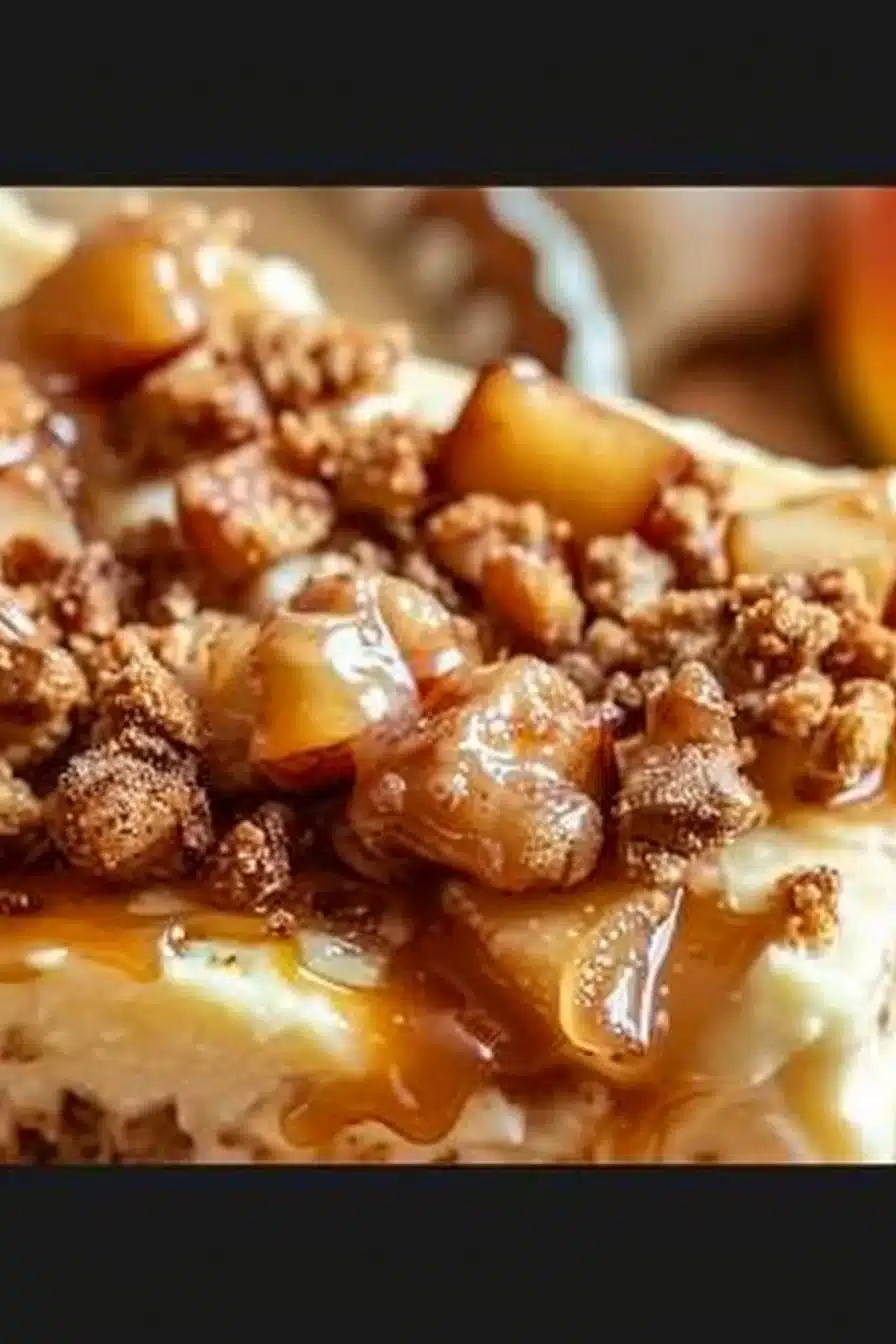
Slick melted butter and sugar transform dry graham particles into a cohesive, compressible layer that accepts a dense dairy batter. Oven heat causes the cream cheese matrix to firm from the edges inward while visible steam and a faint caramel aroma rise during the bake.
Hydration of graham crumbs under melted butter and sugar
The mixture of 1 1/2 cups graham cracker crumbs, 1/2 cup sugar, and 1/2 cup unsalted butter, melted behaves as a particulate-absorption system in this formula. The crumb particulate network soaks the melted fat and suspends fine sugar crystals; hydration here refers to the slight uptake of free moisture from the melted butter and any ambient liquid transferred from the baking environment. Within the 9×13 inch footprint the coated crumbs lose granular mobility and acquire plasticity, which is necessary to accept compressive force. The transformation is measurable by the reduction in void space between particles as pressure compacts the mixture into a continuous supporting plane for the 2 (8 oz) packages cream cheese, softened filling. This specific mass-to-fat ratio determines how much the graham layer will deform when pressed and how readily it will resist lateral shear when the cheesecake mixture is poured above it.
Fat dispersion through a 1/2 cup butter to 1 1/2 cups crumb ratio
Melted unsalted butter at 1/2 cup spreads into the graham crumbs, forming a discontinuous fat phase that coats individual fragments and fills interstitial voids. The resulting microstructure is a packed bed where the fat reduces frictional contact among 1 1/2 cups of crumbs and allows surface particles to glide into a denser arrangement during pressing. In this recipe the sugar quantity in the crust, 1/2 cup, contributes to the granular skeleton that the butter must wet; incomplete wetting leads to a looser, crumbly layer while full dispersion yields a compact, slightly glossy substrate. The heat retained in the melted butter at the time of pressing influences immediate consolidation; cooled fat will hold particle positions, while still-warm fat allows incremental settling into finer crevice filling as the crust is pressed firmly into the prepared baking dish.
Cream cheese smoothing and protein loosening during beating
The two packages of cream cheese at room temperature undergo a phase change from a semi-rigid gel to a plasticized mass when beaten with 1 cup sugar and 1 teaspoon vanilla extract. The mechanical shear from beating aligns casein aggregates and distributes dissolved sugar uniformly, reducing local viscosity pockets within the dairy matrix specific to this recipe. This process mirrors structural behavior seen in other bar-style cheesecakes such as cottage cheese protein brownies, where dairy proteins are similarly transformed into a dense, uniform batter before baking.
Gas cell formation as eggs integrate into a dense cream cheese network
Adding 2 large eggs sequentially to the sweetened cream cheese establishes discrete gas inclusion events within this viscous system. Each egg introduces both liquid and entrained air; mixing after each addition shears the internal structure sufficiently to trap microbubbles. Given the high fat and sugar content from the cream cheese and 1 cup sugar, the resultant trapped gas is stabilized during the early stages of bake, contributing to a slight lift in the central mass rather than a full rise as in an unfettered sponge. The eggs also provide coagulating proteins that later set around these gas cells; in this specific formula the balance between trapped air and protein setting governs whether the center becomes a dense set or retains small pockets of lower density before the oven reaches the plateau where the center is set.
Moisture migration from diced apples into the surrounding batter
Folding 2 cups diced apples (preferably tart) into the cheesecake blend establishes local moisture gradients within the poured mass. Apple cells, when mechanically ruptured during dicing and folding, release soluble solids and free water that migrate into adjacent cream cheese pockets. This fruit-driven moisture behavior parallels other apple-based baked desserts like baked apple cinnamon oat cups, where released apple juices soften surrounding structures while baking.
Caramel surface layering and marbling under a knife swirl
A 1 cup volume of caramel sauce applied to the top surface of the poured cheesecake mixture creates a syrupy, lower-viscosity phase that remains largely separate from the denser dairy matrix. Drizzling distribution patterns generate variable thickness across the 9×13 plane; a gentle knife swirl imposes shear and folding that forms elongated filaments of caramel penetrating only shallowly into the cream cheese. The surface tension of the caramel and the higher yield stress of the cheesecake mixture arrest deeper infusion, producing a marbled topography. The way the caramel interacts with the surface in this recipe echoes surface layering phenomena seen in other bar formats such as almond flour sugar cookie bars, but here the caramel remains more mobile during the initial bake minutes, preserving visible ribbons rather than fully merging into the filling.
Thermal gradient across a 9×13 dish at 350°F over 30–35 minutes
In a 9×13 dish at 350°F (175°C) the outermost edges of the cheesecake mass encounter conductive heat transfer from the pan first, creating a radial thermal gradient that moves toward the center. The recipe’s specified 30–35 minute window establishes a heating profile in which the periphery reaches setting temperatures and light browning earlier, while the central zone lags and approaches set only near the end of the bake period. This differential is observable in the thin golden ring noted at the edges and the visual cue “center is set” when the internal plateau of protein coagulation and moisture evaporation is reached. The magnitude of the gradient in this specific recipe determines the degree to which the apple dice and caramel threads retain their original structure versus undergoing softening or thinning under heat.
Starch consolidation at the crumb–batter interface during bake
Graham cracker crumbs contain cereal starches that respond to moisture introduced by the cream cheese batter and apple juices. As the top layer heats, these starch granules near the interface absorb available water and swell slightly, then partially retrograde as the system cools. In this recipe the starch behavior produces a thin, more cohesive boundary zone that bonds the crust to the bottom of the cheesecake filling; the degree of consolidation depends on the initial compaction of the pressed crust and the timing of liquid migration during the 30–35 minute bake. The result is an interface where the crumb matrix shows lowered friability adjacent to the set dairy mass while retaining a distinguishable textural contrast across the thickness of the 9×13 slice.
Cooling contraction and final set before cutting
After removal from the oven, the cheesecake mass contracts as internal temperature drops; proteins tighten and any remaining entrained gases compress, leading to a small loss of volume that is specific to the proportions in this recipe. The caramel on top becomes more viscous on cooling and the apples firm slightly as free moisture re-equilibrates. Allowing the assembled pan to cool completely stabilizes the microstructure such that slicing into bars produces clean separations rather than smeared edges; the timing indicated in the method ensures the dairy matrix reaches its equilibrium rigidity prior to sectioning.
Preparation steps
The procedural sequence follows the exact order provided in the source.
- Preheat the oven to 350°F (175°C). Grease a 9×13 inch baking dish.
- In a mixing bowl, combine the graham cracker crumbs, 1/2 cup sugar, and melted butter. Press this mixture firmly into the bottom of the prepared baking dish to form the crust.
- In another bowl, beat the softened cream cheese until smooth. Add 1 cup sugar and vanilla extract and mix until well combined.
- Add eggs one at a time, mixing well after each addition.
- Fold in the diced apples and cinnamon.
- Pour the cheesecake mixture over the crust and smooth the top.
- Drizzle caramel sauce over the top of the cheesecake mixture. Swirl it gently with a knife to create a marbled effect.
- Bake for about 30-35 minutes or until the center is set and the edges are lightly golden.
- Allow to cool completely before cutting into bars.
- Serve with extra caramel sauce drizzled on top if desired.
The bars rest in the pan until the internal structure reaches ambient temperature and the caramel viscosity has increased sufficiently to remain largely in place on the surface. Final bar geometry retains defined layers: compacted graham crust, dense cream cheese matrix with embedded apple pockets, and a shallow marbled caramel top.
Print
Caramel Apple Cheesecake Bars
- Total Time: 50 minutes
- Yield: 12 servings 1x
- Diet: Vegetarian
Description
Delicious cheesecake bars with a graham cracker crust, creamy filling, and a caramel topping.
Ingredients
- 1 1/2 cups graham cracker crumbs
- 1/2 cup sugar
- 1/2 cup unsalted butter, melted
- 2 (8 oz) packages cream cheese, softened
- 1 cup sugar
- 1 teaspoon vanilla extract
- 2 large eggs
- 2 cups diced apples (preferably tart)
- 1 teaspoon cinnamon
- 1 cup caramel sauce
Instructions
- Preheat the oven to 350°F (175°C). Grease a 9×13 inch baking dish.
- In a mixing bowl, combine the graham cracker crumbs, 1/2 cup sugar, and melted butter. Press this mixture firmly into the bottom of the prepared baking dish to form the crust.
- In another bowl, beat the softened cream cheese until smooth. Add 1 cup sugar and vanilla extract and mix until well combined.
- Add eggs one at a time, mixing well after each addition.
- Fold in the diced apples and cinnamon.
- Pour the cheesecake mixture over the crust and smooth the top.
- Drizzle caramel sauce over the top of the cheesecake mixture. Swirl it gently with a knife to create a marbled effect.
- Bake for about 30-35 minutes or until the center is set and the edges are lightly golden.
- Allow to cool completely before cutting into bars. Serve with extra caramel sauce drizzled on top if desired.
Notes
Allow the bars to cool completely in the pan before slicing for clean edges.
- Prep Time: 15 minutes
- Cook Time: 35 minutes
- Category: Dessert
- Method: Baking
- Cuisine: American
Nutrition
- Serving Size: 1 bar
- Calories: 320
- Sugar: 20g
- Sodium: 210mg
- Fat: 18g
- Saturated Fat: 9g
- Unsaturated Fat: 6g
- Trans Fat: 0g
- Carbohydrates: 35g
- Fiber: 1g
- Protein: 4g
- Cholesterol: 60mg