

Banana oat protein muffins come together with very little friction. The process does not rely on complex sequencing or precise timing, which is what makes it approachable. From the moment the ingredients are assembled, the mixture behaves predictably, moving from dry to cohesive without resistance. Creaminess develops early, not as a final effect, but as a guiding characteristic throughout the preparation.
What defines these muffins is how calmly the batter responds to each step. Nothing needs to be rushed or corrected aggressively. Moisture is introduced gradually, structure forms without force, and the oven completes the work without demanding constant attention. The result is a muffin that feels steady and soft, shaped by ease rather than intervention.
Print
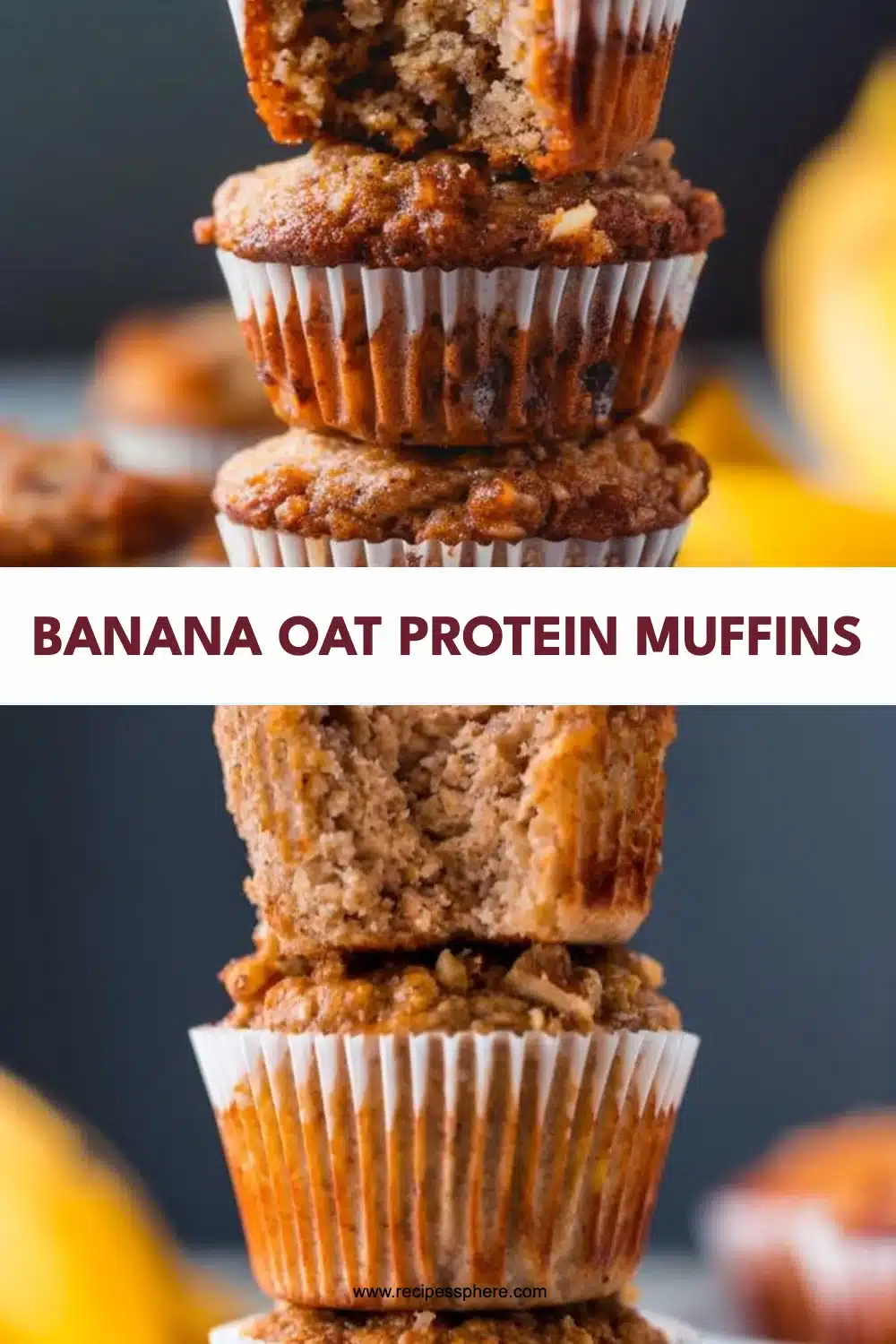
Banana Oat Protein Muffins
- Total Time: 40 minutes
- Yield: 12 muffins 1x
- Diet: Vegetarian
Description
Delicious and nutritious banana oat protein muffins, perfect for a healthy breakfast or snack.
Ingredients
- 1 cup rolled oats (for flour)
- 1 cup rolled oats (whole)
- 1/2 cup protein powder
- 2 tsp baking powder
- 1/2 cup ground walnuts
- 1 tsp ground cinnamon
- 1/4 cup coconut oil
- 2 ripe bananas, mashed
- 1 cup milk (or plant-based milk)
- Coconut sugar (for topping, optional)
Instructions
- Preheat the oven to 350°F (175°C).
- Line a 12-muffin pan with muffin cups or grease it lightly with fat.
- Using a blender, process 1 cup of rolled oats into flour for about 45 seconds.
- In a large mixing bowl, combine the oatmeal flour, remaining rolled oats, protein powder, baking powder, ground walnuts, and cinnamon; stir well.
- Melt the coconut oil over low heat in a medium saucepan. Remove from heat when melted.
- Add the mashed banana and milk to the saucepan; whisk until evenly combined.
- Gradually add the liquid mixture into the dry ingredients; stir until just combined.
- Pour the mixture evenly into the muffin tins, adding optional coconut sugar and more ground walnuts on top.
- Bake for 20-25 minutes, or until a toothpick inserted in the center comes out clean.
- Cool muffins on a wire rack before serving.
Notes
Store in an airtight container at room temperature. Reheat gently if needed.
- Prep Time: 15 minutes
- Cook Time: 25 minutes
- Category: Breakfast
- Method: Baking
- Cuisine: American
Nutrition
- Serving Size: 1 muffin
- Calories: 180
- Sugar: 7g
- Sodium: 75mg
- Fat: 8g
- Saturated Fat: 6g
- Unsaturated Fat: 2g
- Trans Fat: 0g
- Carbohydrates: 24g
- Fiber: 3g
- Protein: 6g
- Cholesterol: 0mg
How the dry base sets expectations
The preparation begins with dry ingredients that already suggest the final texture. Oat flour and rolled oats bring a natural softness, while protein powder adds density without stiffness. Baking powder is evenly dispersed to ensure consistent rise, and ground walnuts and cinnamon introduce subtle variation without disrupting the base.
Before any liquid is added, this mixture feels balanced in the bowl. The particles are varied but cooperative, ready to absorb moisture evenly. Taking a moment to mix these ingredients thoroughly ensures that later steps remain uncomplicated and smooth.
Banana as the primary softening element
Mashed banana enters as both structure and moisture. Its texture is naturally forgiving, blending easily into other components without requiring aggressive mixing. The banana’s role is not to dominate the batter, but to soften it from within.
As it is whisked with milk and coconut oil, the banana distributes evenly, eliminating pockets of dryness before they can form. This early integration is what allows the batter to feel creamy rather than grainy once the dry ingredients are incorporated.
Why coconut oil keeps the batter fluid
Melted coconut oil moves through the liquid mixture smoothly, coating the banana and milk before they ever reach the dry ingredients. Because it is introduced in liquid form, it blends easily and does not require additional manipulation.
This fat plays a quiet but important role. It keeps the batter from tightening too quickly and helps maintain softness as the muffins bake. The oil supports creaminess without making the mixture heavy or slow to stir.
Combining wet and dry without effort
When the liquid mixture is added to the dry ingredients, the batter thickens almost immediately. This change is expected and controlled. Stirring gently allows moisture to reach every particle without overworking the mixture.
The goal at this stage is cooperation, not uniformity. A few visible oat pieces are not a flaw; they are part of the structure. Stopping as soon as everything is hydrated preserves the relaxed texture that defines the finished muffins.
Filling the pan with consistency in mind
Portioning the batter evenly into the muffin tin ensures that each muffin experiences the same baking conditions. Because the batter is thick but fluid, it settles naturally into the cups without needing to be spread or pressed.
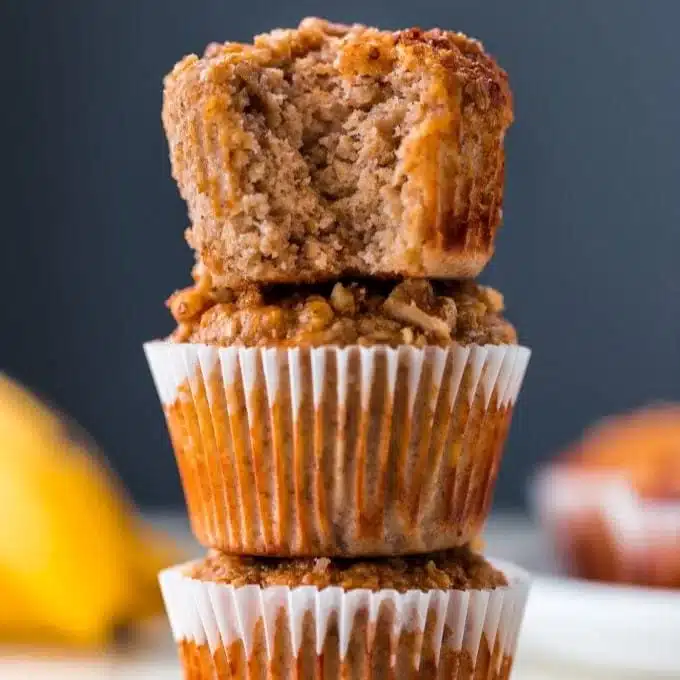
This step reinforces ease. Once filled, the muffins are already shaped and ready, with no adjustments required. Optional toppings can be added lightly, resting on the surface without sinking.
What happens once heat is applied
In the oven, the batter responds gradually. Baking powder activates as the temperature rises, and internal moisture begins to steam. The muffins lift gently rather than dramatically, forming rounded tops without cracking aggressively.
As they bake, creaminess transitions into structure. The interior sets softly while the exterior becomes lightly firm. This balance is the result of steady heat rather than high intensity.
Cooling as part of the texture
Once removed from the oven, the muffins continue to change. Steam escapes slowly, allowing the interior to settle. Cooling in the pan briefly helps the structure hold before the muffins are moved.

Transferred to a rack, they finish cooling evenly. This prevents surface moisture from collecting and keeps the crumb soft instead of dense. The muffins feel stable but still yielding when touched.
How these muffins hold over time
Stored in an airtight container, the muffins retain their creaminess well. The oat-based structure resists drying, especially when protected from air exposure. Over time, the texture becomes slightly more cohesive without losing softness.
Gentle reheating restores warmth without altering structure. Low heat is enough to revive the interior, making the muffins feel freshly baked again.
Placing them alongside similar bakes
These banana oat protein muffins share a calm, dependable texture with other oat-forward recipes. If you enjoy this style, you may also appreciate these banana protein muffins, which lean more heavily on fruit softness, or these oatmeal protein muffins, where oats play an even more central role.
Each variation follows the same principle: minimal force, balanced moisture, and steady heat.
A practical close rooted in ease
Banana oat protein muffins are designed to fit naturally into routine preparation. The batter comes together without resistance, the oven does the work without drama, and the finished muffins hold their texture without special handling.
They are dependable, flexible, and easy to return to. Whether made ahead or enjoyed warm, they maintain their creamy interior and steady structure, offering a straightforward baking experience that rewards simplicity.