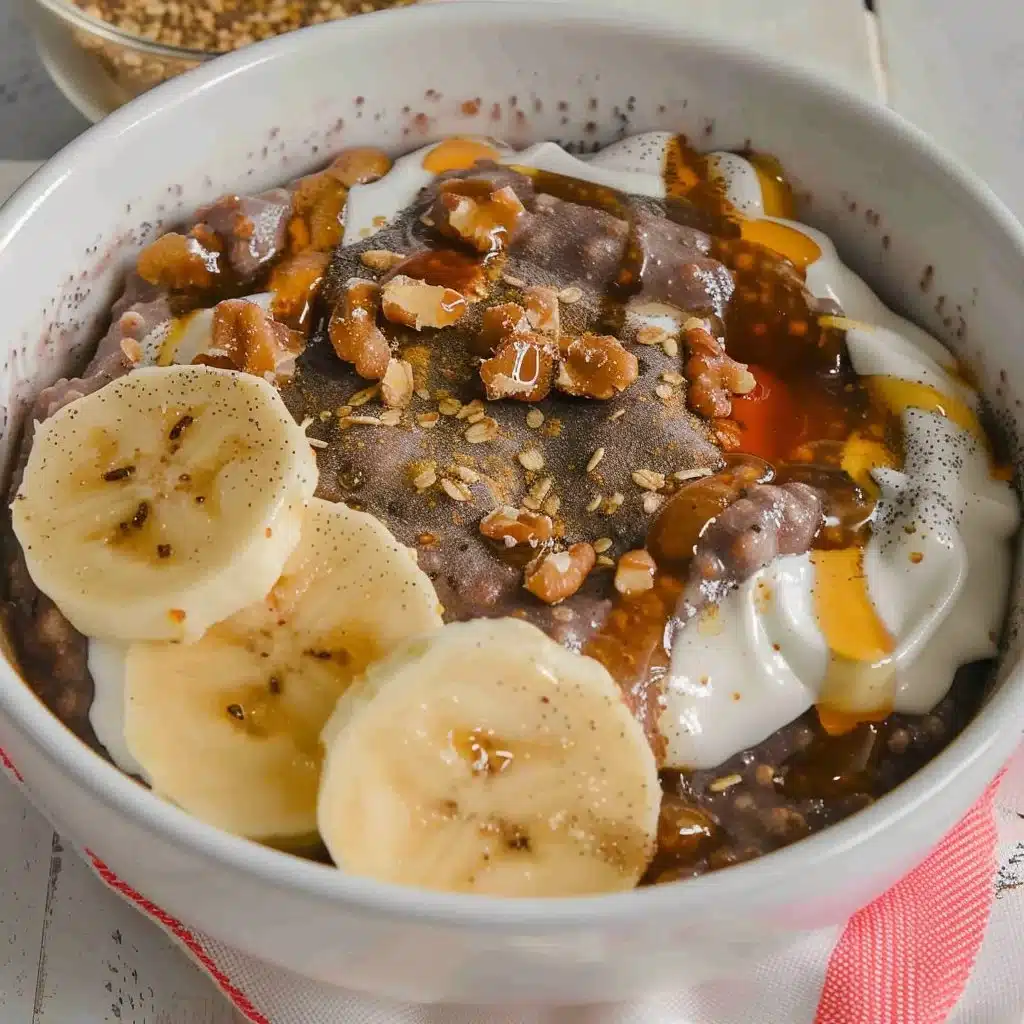
I come to warm chia pudding for its lightness, the way it begins almost invisible and then slowly takes shape. At first it is only seeds and milk, loose and drifting, but even then the texture hints at what it will become. I like how little pressure it asks for. There is stirring, waiting, a gentle warmth later on, and that is enough. The pudding does not rush toward thickness. It floats there for a while, then quietly gathers itself, becoming something soft but defined. What draws me back is that feeling of suspension, of a texture that holds without weight, that feels finished without feeling fixed.
Combining seeds and liquid with patience and openness
When I stir chia seeds into milk, nothing dramatic happens at first. The seeds scatter and sink, some rising back to the surface, others hovering in between. It feels unfinished, and that is exactly the point.
I pay attention to how evenly they are distributed, knowing that this early moment decides everything that follows. If the seeds clump now, they will stay that way. If they are given space, they thicken together later.
Warm Chia Pudding
- Total Time: 25 minutes
- Yield: 4 servings 1x
- Diet: Vegetarian
Description
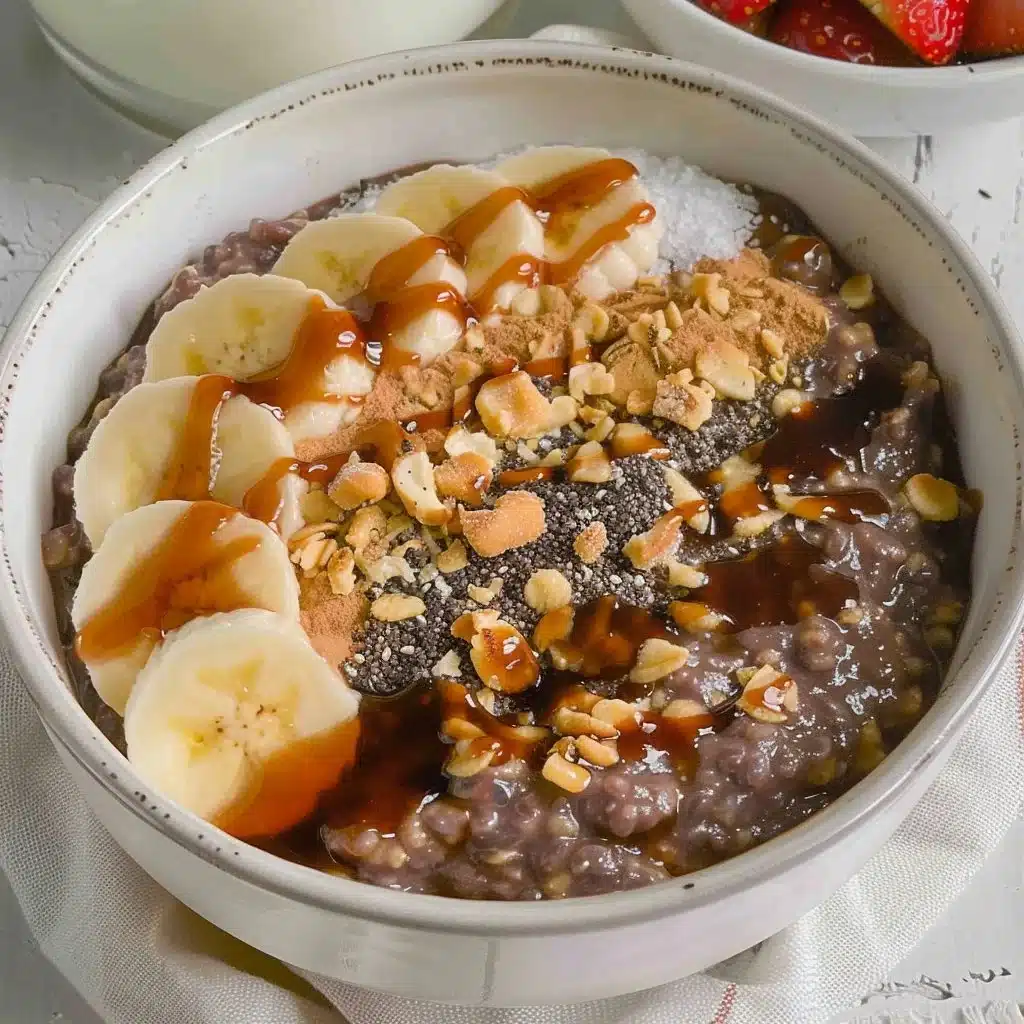
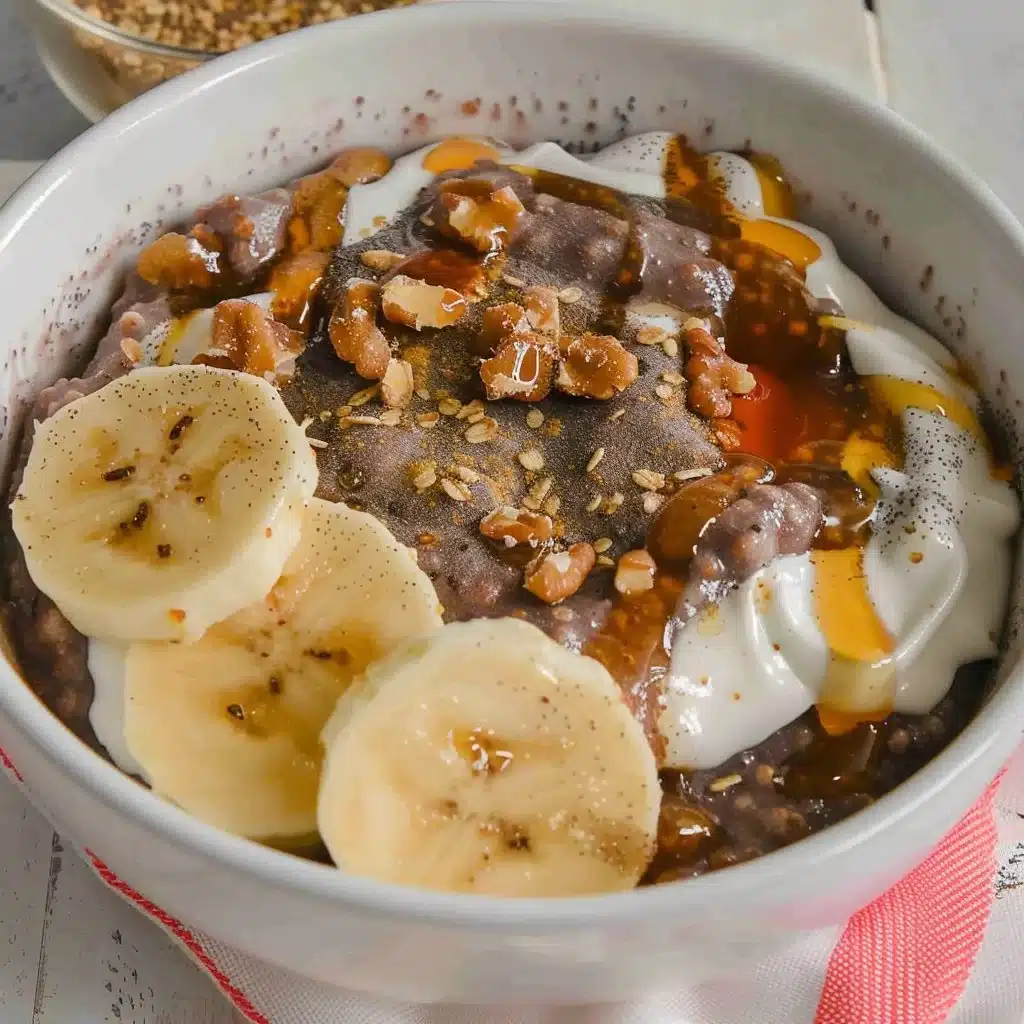
A delightful warm chia pudding enriched with caramelized bananas, peanut butter, and Greek yogurt, offering a creamy yet gel-like texture.
Ingredients
- ½ cup whole chia seeds
- 2 cups milk of choice
- 1 tbsp maple syrup
- 1 tsp vanilla extract
- 2 tsp ground cinnamon
- 1 tsp coconut oil
- 1 medium banana, thinly sliced
- Peanut butter to taste
- Plain Greek yogurt to taste
- Chopped walnuts to taste
- Shredded unsweetened coconut to taste
Instructions
- In a medium bowl, combine chia seeds and milk.
- Stir in maple syrup, vanilla extract, and ground cinnamon until well combined.
- Cover and refrigerate for at least 2 hours or overnight until thickened.
- Melt coconut oil in a skillet over medium heat.
- Add banana slices to the skillet and cook until golden brown, about 2-3 minutes per side.
- Once the chia pudding is set, spoon it into bowls and top with peanut butter, Greek yogurt, walnuts, shredded coconut, and caramelized bananas.
Notes
Serve warm and enjoy the defined layers of flavors. The pudding can be refrigerated to enhance flavor development.
- Prep Time: 15 minutes
- Cook Time: 10 minutes
- Category: Breakfast
- Method: Mixing, Cooking
- Cuisine: Healthy
Nutrition
- Serving Size: 1 serving
- Calories: 350
- Sugar: 10g
- Sodium: 50mg
- Fat: 15g
- Saturated Fat: 5g
- Unsaturated Fat: 8g
- Trans Fat: 0g
- Carbohydrates: 45g
- Fiber: 10g
- Protein: 12g
- Cholesterol: 5mg
The milk remains fully in control at this stage, moving freely around the seeds. There is no resistance yet, only the suggestion that change is beginning beneath the surface.
I stop stirring before it looks resolved. The mixture needs room to move on its own, to begin absorbing without being pushed.
Letting absorption unfold through timing and restraint
As the mixture rests, the texture starts to shift. The liquid grows quieter, more resistant, as the seeds draw moisture inward. This is a slow change, easy to miss if I am not looking for it.
The surface becomes less reflective, less mobile. What once rippled now settles more quickly, hinting at structure without declaring it.
I have learned not to interrupt too soon. Absorption works best when left alone, when the seeds are trusted to swell evenly rather than forced into it.
By the time I return, the mixture already feels thicker, as if it has taken a breath and decided to stay.
Adding warmth to encourage cohesion and lift
When I warm the pudding gently, everything accelerates just slightly. Heat doesn’t replace time, but it supports it, helping the gel form more fully.
I keep the temperature low, watching for movement rather than bubbles. Too much heat unsettles the structure, while just enough encourages the seeds to hold what they have absorbed.
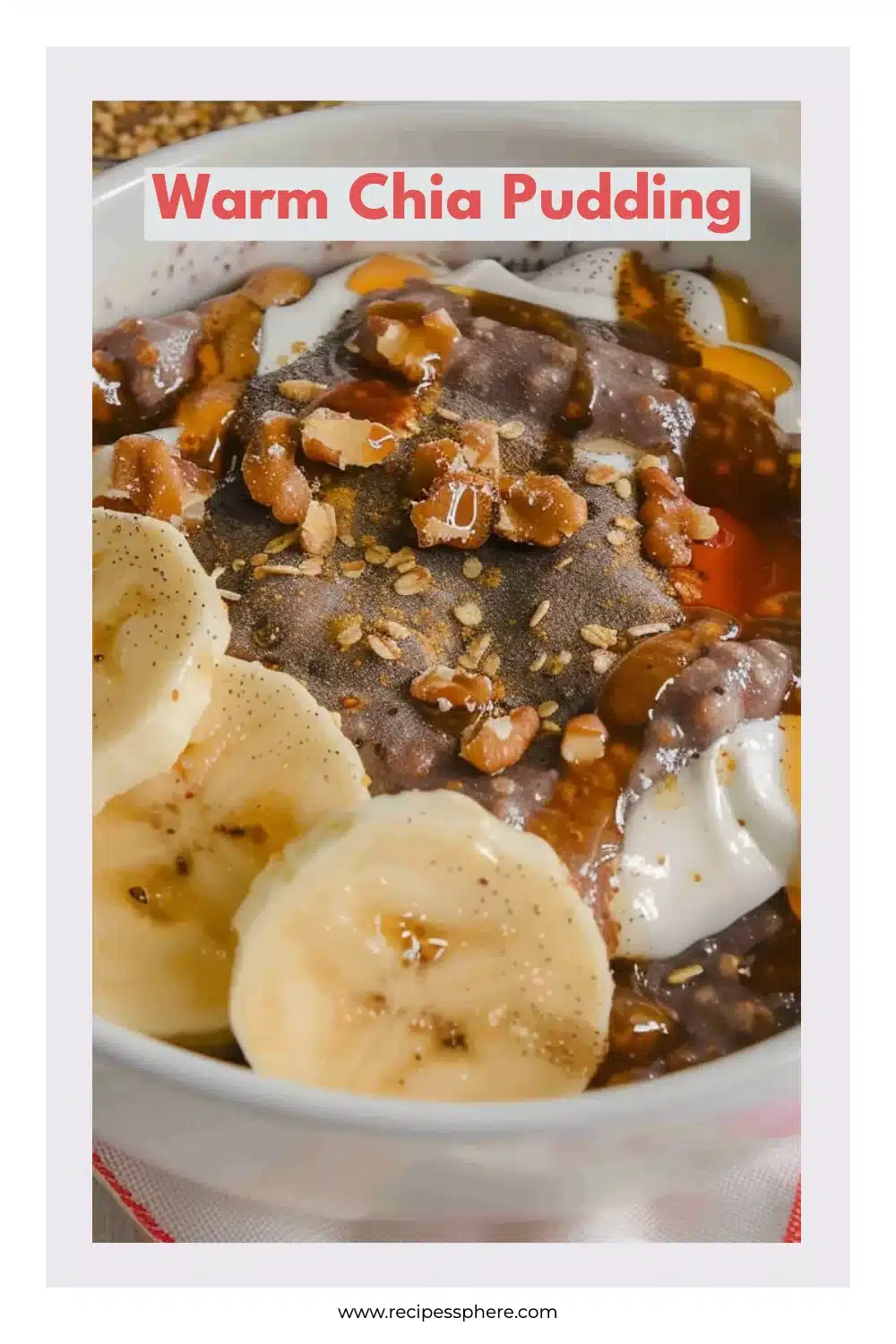
The pudding begins to move as a whole rather than as liquid and solids. It responds to the spoon with softness instead of flow.
The texture becomes silkier here, not heavier, as if warmth has smoothed its edges without weighing it down.
Cooling the mixture for stability and calm
Once removed from heat, the pudding needs stillness. Cooling is not a pause between steps but a continuation of the same process.
As the temperature drops, the gel sets more firmly. Moisture redistributes, filling in gaps and evening out the texture from top to bottom.
The surface becomes matte and steady, no longer shifting with the slightest movement of the bowl.
I wait until it feels settled, no longer drifting when tilted, before moving on.
Layering bananas for softness and diffusion
Caramelized bananas bring warmth and contrast, but how they are added matters. I layer them gently rather than stirring them through.
Placed between spoonfuls of pudding, they release flavor slowly, infusing without overwhelming. The pudding stays light, the banana present but not dominant.
The warmth of the bananas briefly loosens the surrounding pudding, creating a soft transition between layers.
This approach mirrors the gentle balance found in preparations like overnight strawberry chia pudding, where fruit integrates through proximity rather than force.
Dividing portions for cooling and balance
I portion the pudding while it is still warm, letting smaller servings cool more evenly. The texture holds better this way, settling quickly without forming dense pockets.
Each bowl feels complete on its own, the surface smooth, the interior consistent. There is no waiting for a large batch to catch up.
The edges cool at the same pace as the center, preserving the lightness established earlier.
This step keeps the pudding airy, preventing it from compacting under its own weight.
Adding toppings for contrast and gentleness
Peanut butter and yogurt sit on top rather than being mixed in. I like the separation, the way each bite changes slightly as the spoon moves through layers.
The toppings soften as they meet the pudding, but they don’t disappear. They rest there, adding richness without disturbing the base.
The contrast between cool pudding and softer toppings creates variation without heaviness.
This restraint echoes the simplicity found in classic almond milk chia pudding, where clarity of texture is part of the appeal.
Resting under refrigeration for continuity and ease
If I store the pudding, the texture continues to refine itself. Cold encourages flavors to mingle while the structure stays intact.
The gel holds, neither tightening nor loosening too much, as long as it is left undisturbed. Each hour adds quiet depth.
The surface remains smooth, protected from drying by the pudding’s own cohesion.
I find that returning to it later feels natural, as if nothing has been lost in the waiting.
Reheating gently and finishing with encouragement
When I warm the pudding again, I do it slowly, letting heat move through without breaking the gel. The texture softens but does not collapse.
It returns to itself easily, light and composed, ready without adjustment. I don’t need to fix it or rethink it.
The warmth lifts aroma and softness together, restoring the balance between movement and structure.
This is a dish that meets me halfway, asking only for attention and patience, and offering something calm and reassuring in return.